Service Dog Training in Wilmington, NC
Service and therapy dog training in Wilmington and surrounding areas
Dog Training Elite Wilmington provides specialized service dog training designed to develop the obedience, reliability and task-specific skills needed for a dog to assist its handler in everyday life. Our programs cover PTSD and psychiatric service dogs, mobility support service dogs and autism support service dogs, along with therapy dog training.
Training for a reliable working partner
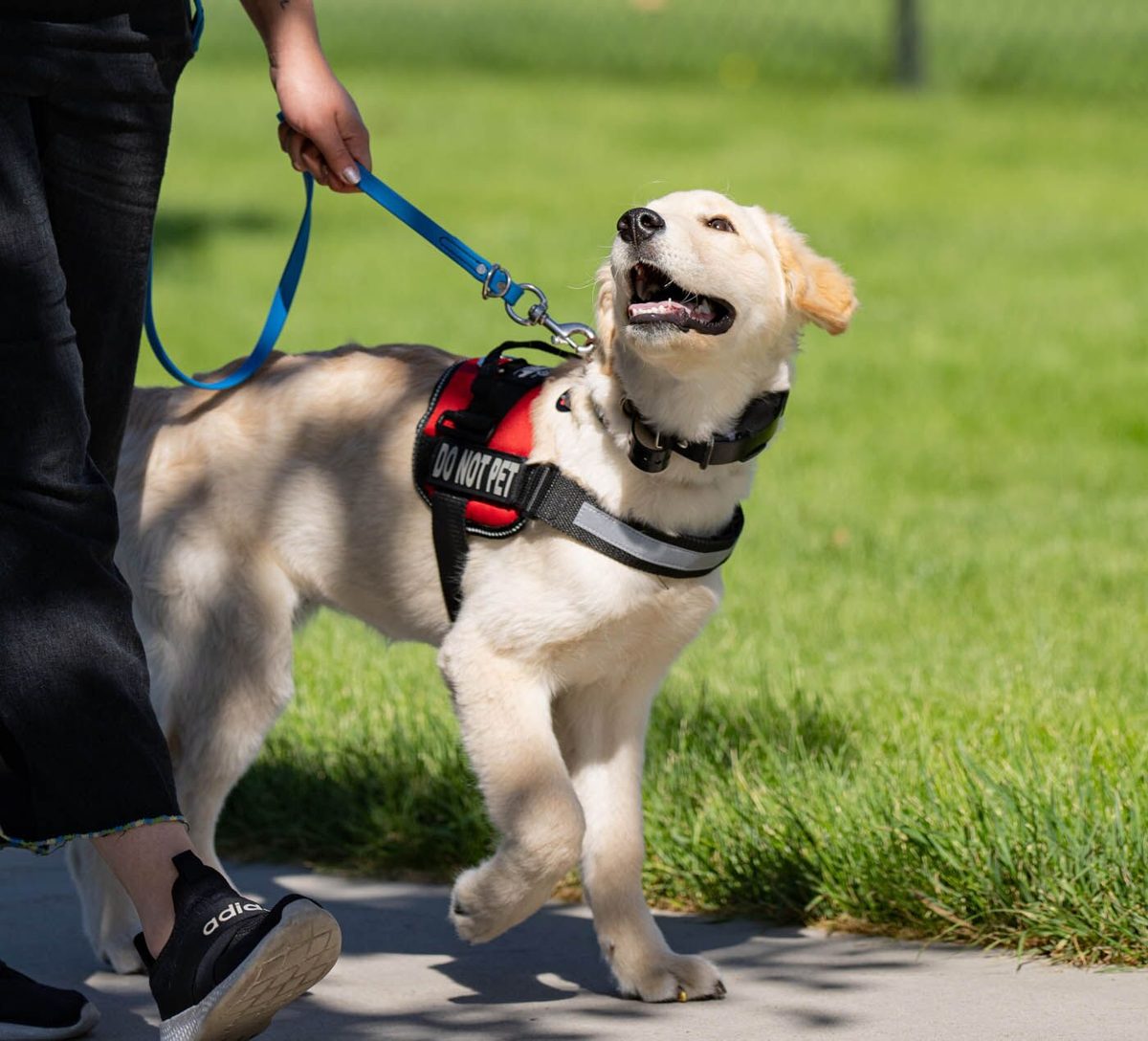
Service dog training goes beyond basic obedience. A working dog must be able to behave reliably in public environments, remain focused around distractions and perform the skills or tasks required by its handler.
We’ll help evaluate your needs, your dog and the appropriate training path, including foundational obedience, public-access behavior and task-specific training available through Dog Training Elite Wilmington.
Service dog programs
PTSD service dog
For veterans and civilians living with post-traumatic stress disorder. Tasks can include deep pressure therapy during a panic attack, nudging or pawing to interrupt rising anxiety, checking a room before you enter and creating space between you and people approaching in public.
Psychiatric service dog
For anxiety, depression and other psychiatric disabilities. The dog learns to recognize specific signs of distress and respond with a task, such as applying deep pressure, using touch to interrupt and ground you, or blocking people from crowding you in public.
Mobility support service dog
For people with mobility challenges. Tasks can include opening doors, turning lights on and off, retrieving items, steadying you for balance, pulling a wheelchair and finding help.
Autism support service dog
For children and adults with autism. Tasks can include tracking a child who wanders off, tethering a child to the dog’s harness in public and interrupting a meltdown or repetitive behavior with a nudge or paw, or with deep pressure.
Not sure which program fits? That’s what the free phone consultation is for. We’ll ask about your needs and your daily routine and recommend a starting point.
How service dog training works
Each team’s plan is built around the handler, but the training follows the same order.
- Consultation and evaluation. We learn what you need help with, then evaluate your dog, or help you choose one, for the temperament service work demands.
- Foundation obedience. Reliable sit, down, stay, come, loose-leash walking and settling on a mat, first at home and then around distractions.
- Public access behavior. Calm, focused behavior in stores, restaurants, waiting rooms and parking lots: ignoring dropped food, strangers and other dogs, and settling quietly under a table.
- Task training. The specific tasks that help with your disability, taught in small steps and practiced until they’re dependable.
- Proofing and practice. Tasks rehearsed in the places your team goes, plus the ongoing practice that keeps a working dog sharp.
Public access and task training often overlap. How long each stage takes depends on the dog, the tasks and how consistently the team practices. We use positive reinforcement within a balanced approach, building trust and motivation rather than relying on punishment.
Training starts in your home and moves into the places you actually go: your grocery store, your pharmacy, your doctor’s office, downtown Wilmington along the Riverwalk.
Ways to get a service dog
Train the dog you already have. We start with an evaluation. A service dog needs to stay calm in crowds, be neutral toward strangers and other dogs, recover quickly from surprises and be physically suited to its tasks. Plenty of wonderful family dogs aren’t a fit for public work, and we’ll tell you honestly where your dog stands.
Start with a puppy chosen for the job. We can help you select a puppy from an established breeder, keep an eye on its temperament as it grows and handle its early socialization and obedience. The goal is a puppy with solid obedience by about six months old, ready to begin advanced public access and task work. You’re involved from the start, so your bond grows along with the training. Our puppy training page covers those early foundations.
Therapy dog training
A therapy dog brings comfort to many people, in hospitals, nursing homes, schools and community centers, rather than performing tasks for one handler. Therapy dog training is for friendly, steady dogs whose owners want to share them with others. Your dog should already follow commands reliably and enjoy meeting new people. Young puppies usually aren’t ready, so most dogs start once they’ve matured and finished obedience training.
Training covers the manners a visit demands: loose-leash walking through busy hallways, polite greetings without jumping, a dependable “leave it” and calm behavior around wheelchairs, walkers and sudden noises. After training, you apply for certification through a therapy dog organization, and regular practice keeps your dog ready for visits. Therapy dogs don’t have public access rights under the ADA. They visit where they’re invited.
For more on how service dogs, therapy dogs and emotional support animals differ, read our guide to all three.
“I’m so glad I signed up for DTE! They have helped me understand my dog and we are on our way to becoming a therapy dog team. Highly recommend!” - Shawna White, Google review
Service dog laws in North Carolina
A quick summary of the rules our clients ask about most. This is general information, not legal advice.
- What counts as a service dog. The Americans with Disabilities Act defines a service animal as a dog individually trained to do work or perform tasks for a person with a disability. Dogs whose only job is comfort or emotional support don’t qualify.
- No certification required. The ADA doesn’t require certification, registration, an ID card or a vest. Certificates and registrations sold online don’t grant any rights under the ADA.
- What a business can ask. When it isn’t obvious what a service dog does, staff may ask only whether the dog is required because of a disability and what work or task it has been trained to perform.
- Owner training is allowed. The ADA doesn’t require a professional training program. People with disabilities may train their own dogs, and many work with a trainer to reach the reliability public access demands.
- Control in public. A service dog must be harnessed, leashed or tethered unless that would interfere with its work or the handler’s disability prevents it, and the handler must keep the dog under control.
- Dogs in training. The ADA covers only dogs that are already trained. North Carolina law (G.S. 168-4.2) allows an animal in training to become a service animal to enter public places for training when it’s accompanied by the person training it and wears a collar and leash, harness or cape identifying it as a service animal in training.
- North Carolina registration. The NC Department of Health and Human Services issues free service animal registrations under G.S. 168-4.3. Registration is voluntary, and the ADA doesn’t require it.
The U.S. Department of Justice answers more questions in its service animal FAQ.
Why handlers work with Dog Training Elite Wilmington
Dog Training Elite Wilmington is veteran owned, founded by Kati and Troy Chipps. Troy served in the Marine Corps as a military dog handler out of Jacksonville, NC, so dependable working-dog behavior is the standard we train toward. Our lead trainer, Katy, specializes in service and therapy dog training along with behavior modification and advanced obedience.
Because we train in your home, you learn alongside your dog in every session, which matters for a working team. From a client whose golden is training to be a therapy dog, describing their trainer:
“She provides just the right amount of instruction so I am not overwhelmed. It is evident that I am the one in training so Sally Mae and I are both learning to obey.” - Sharon Roberts, Google review
We train service dog and therapy dog teams in their homes and communities across Wilmington, Leland, Hampstead, Wrightsville Beach and Carolina Beach.
Service dog training questions
Do you train service dogs in Wilmington, NC?
Yes. Dog Training Elite Wilmington trains PTSD, psychiatric, mobility support and autism support service dogs, and we also offer therapy dog training. We work with handlers in their homes and communities across Wilmington, Leland, Hampstead, Wrightsville Beach and Carolina Beach. The first step is a free phone consultation, where we learn what you need and recommend a training path.
Can my own dog be trained as a service dog?
It depends on your dog. The ADA allows people with disabilities to train their own service dogs and doesn't require a professional program, but the dog has to be suited to the work. A service dog must stay calm and focused in busy places, ignore strangers, food and other dogs, and be physically able to do its tasks. We start with an evaluation and give you an honest answer. If your dog isn't a good fit for public work, we can help you choose a puppy with a better chance of succeeding at the work.
How long does service dog training take?
It depends on your dog's age and temperament, the tasks you need and how consistently you practice between sessions. Training builds in stages: foundation obedience, public access behavior, then task training and practice in real places. Puppies in our program work toward solid obedience by about six months old before moving on to advanced work. Once we've evaluated your dog and your needs, we'll give you a realistic estimate.
Does a service dog need to be certified or registered?
Not under federal law. The Americans with Disabilities Act doesn't require certification, registration, an ID card or a vest, and certificates or registrations sold online don't grant any rights under the ADA. When it isn't obvious what a service dog does, staff at a business may ask only two questions: whether the dog is required because of a disability, and what work or task it has been trained to perform. North Carolina separately offers a free, voluntary state service animal registration through the NC Department of Health and Human Services.
What is the difference between a service dog and an emotional support animal?
Training and legal rights. A service dog is individually trained to perform specific tasks for a person with a disability and can go with its handler into public places under the ADA. An emotional support animal comforts its owner just by being present, needs no task training and isn't a service animal under the ADA. A psychiatric service dog is not the same as an emotional support animal: it's trained to recognize signs of distress, such as an oncoming anxiety attack, and respond with a specific task.
Can a service dog in training go into stores in North Carolina?
Under the ADA, public access applies only to dogs that are already trained. North Carolina law goes further. G.S. 168-4.2 allows an animal in training to become a service animal to enter public places for training when it's accompanied by the person training it and wears a collar and leash, harness or cape identifying it as a service animal in training. We'll help you decide when your dog is ready for public outings.
Do you offer therapy dog training?
Yes. Therapy dog training is for friendly, well-mannered dogs whose owners want to visit hospitals, nursing homes, schools and community centers. Your dog should already follow commands reliably and enjoy meeting strangers, so most dogs start after obedience training rather than as young puppies. We train the manners a visit requires, then you apply for certification through a therapy dog organization. Therapy dogs don't have the public access rights of service dogs.
What kind of dog makes a good service dog?
Temperament matters more than breed. The ADA doesn't restrict breeds, but a good candidate is calm, confident, eager to work, comfortable around strangers and other animals and quick to recover when something startles them. Size and health matter for some tasks, such as mobility work. If you're starting with a puppy, we can help you select one from an established breeder and monitor its temperament as it grows.
Talk with us about a service dog
Book a free phone consultation and tell us what you need help with and about your dog, if you already have one. We'll recommend a training path that fits. Prefer that we reach out? Request a callback instead.
Prefer to talk now? Call (910) 569 - DOGS.